
How to Use a Derma Roller for Hair: What the Research Says About Technique & Safety
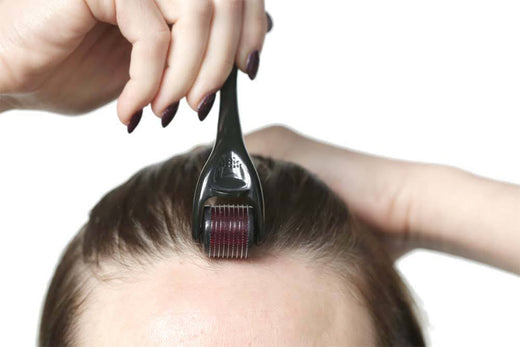
There's no study-backed step-by-step for using a derma roller at home. The research is on microneedling done in clinics, mostly alongside minoxidil, using needle depths from 0.5 to 2.5 mm, and a published case report shows what can go wrong with home use.
Here's what the research says about technique, benefits and safety, and what to ask a dermatologist before trying it.
Key Takeaways
- A review of 22 clinical studies found microneedling improved hair parameters as an adjunct, using needle depths from 0.50 to 2.50 mm and session frequencies from weekly to monthly.
- The review rated the data as relatively low quality.
- A systematic review found microneedling is relatively safe, with expected redness, pain, swelling and temporary irritation.
- A case report describes a serious scalp infection after home derma rolling.
What Is A Derma Roller?
A derma roller is a handheld device with fine needles. Rolling it over the scalp makes tiny punctures in the skin, which is the principle behind microneedling.
Can You Do It At Home?
The studies used medical-grade devices, and none of the abstracts we read give a home protocol. The safest first step is to ask a dermatologist whether microneedling is right for you and how to do it.
We recommend the FullyVital hair growth serum.

What To Ask Your Dermatologist
- Needle depth and frequency. Studies used a range of depths and schedules.
- Hygiene and infection risk. Microneedling breaks the skin.
- What to apply afterwards. Don't guess.
- Whether it suits your hair loss. The evidence is mostly for androgenetic alopecia.
What The Research Shows
Depth, Frequency And Results
A review of 22 clinical studies (1,127 subjects) found microneedling improved hair parameters as an adjunct across types and severities of hair loss, with needle depths from 0.50 to 2.50 mm and session frequencies from once weekly to monthly. It helped in androgenic alopecia when paired with 5% minoxidil, growth factor solutions or PRP. No serious adverse events were reported among 657 subjects, and the reviewers called the data low quality and recommended large randomized trials (English et al., 2022).
Safety
A systematic review of 51 articles (1,029 patients) found microneedling to be relatively safe with minimal adverse effects, including erythema, pain, edema and temporary skin irritation, and noted increasing use at home as well as in clinics (Gowda et al., 2021).
A Home-Use Case Report
A 28-year-old man treating alopecia at home with minoxidil spray followed by derma roller microneedling developed a subpericranial and epidural abscess with skull osteomyelitis, and surgery to evacuate it was planned. The report concluded that scalp hematomas can become infected after procedures like microneedling without an open wound (Jain et al., 2026). This was a single case.
For the wider overview of the tool, see our ultimate guide to the derma roller.
To see what people report from microneedling, read microneedling before and after.
See also: Microneedling for the Hairline: What the Research Shows
For the bigger picture on what helps with thinning and shedding, see our guide to how to stop hair loss.
Frequently Asked Questions
What needle size is used for hair?
Studies used depths from 0.50 to 2.50 mm. Ask a dermatologist what is right for you.
How often should I use a derma roller?
Studies used schedules from weekly to monthly. Ask a dermatologist.
Is a derma roller safe?
Reviews describe microneedling as relatively safe, but a case report describes a serious infection after home use. Talk to a doctor first.
References
- English RS Jr, Ruiz S, DoAmaral P. Microneedling and Its Use in Hair Loss Disorders: A Systematic Review. Dermatol Ther (Heidelb). 2022. PubMed
- Gowda A, Healey B, Ezaldein H, et al. A Systematic Review Examining the Potential Adverse Effects of Microneedling. J Clin Aesthet Dermatol. 2021. PubMed
- Jain R, Sharma A, Bhardwaj P, et al. Subpericranial and epidural abscess with skull osteomyelitis as a complication of microneedling for alopecia: A singular case report. Surg Neurol Int. 2026. PubMed
Read more
Unlock Vibrant Hair: Effective Solutions For Tackling Dead Strands
Discover the secret to reviving dull hair with Fully Vital's top tips and natural solutions for tackling dead hair strands. Say hello to vibrant, youthful locks today!
Read more
Discovering Clarifying Shampoos: Definition And Benefits
Discover the power of clarifying shampoos with Fully Vital! Uncover what they are, their benefits for…
Read more
