
Can Stress Cause Gray Hair - And Can You Undo It?
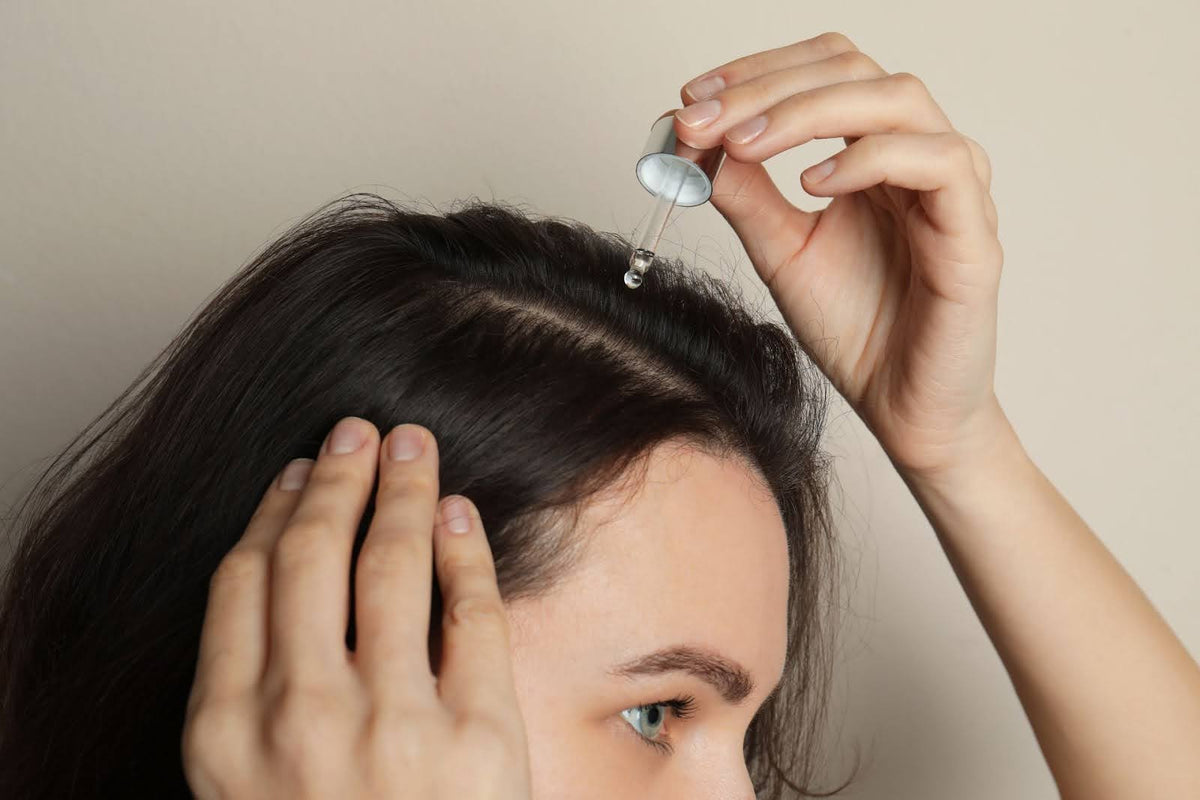
Yes, stress can accelerate gray hair — and science now backs this up.
The 2021 eLife study from Columbia University confirmed a direct link.
But the more hopeful finding is what happened when stress was reduced.
Key fact: A 2021 Columbia University study published in eLife found that stress-related gray hairs showed measurable pigment changes tied to psychological stress events — and in some cases, early pigment return was observed when stress was reduced (Rosenberg et al., eLife, 2021).
If you've been blaming your salon schedule on deadlines and school pickups, you're not imagining it.

The Short Answer
- Yes. Research links chronic stress to faster graying, partly through stress hormones that exhaust the pigment stem cells in the follicle (shown in mice).
- A 2021 study of individual human hairs found some recently grayed hairs regained pigment when stress eased.
- Stress isn't the only cause: genes, age, smoking and low vitamin B12 matter too.
- Any change shows only in new growth, so judge it over months.
Does Stress Actually Turn Hair Gray?
Yes — stress activates a chain reaction that can deplete the pigment cells in your follicles.
Your hair gets its color from melanocytes (the cells that make pigment) inside each follicle.
Stress floods the body with norepinephrine, a stress hormone.
That hormone overstimulates melanocyte stem cells — causing them to burn out and migrate away from the follicle permanently.
Once those stem cells are gone, the follicle can no longer make pigment for that strand.
The result is a gray or white hair in its place.
This is not a slow, background process. The Columbia researchers found pigment changes could be mapped to specific stress events — sometimes within weeks.
If you're ready to start supporting your hair's natural color now, the Anti-Gray 30-Day Kit is designed to address this from the inside out.

Stress is one of several causes. For the full picture, see what causes gray hair, premature graying and gray hair in men.
Can Stress-Related Gray Hair Be Reversed?
In early research, some pigment return was observed when stress levels dropped — but this is not a guaranteed or universal outcome.
The Columbia eLife study analyzed individual hair strands using a technique called synchrotron X-ray fluorescence.
Researchers mapped pigment levels along the length of each strand — essentially reading a timeline of stress in the hair itself.
In a small number of cases, pigment appeared to return in sections that grew during lower-stress periods.
This does not mean all gray hair will reverse when you relax.
Melanocyte stem cells that have already been depleted cannot be replaced simply by reducing stress.
But the finding matters. It shows the graying process is not always a one-way door.
It also suggests that supporting the follicle environment — while you still have active pigment cells — may give your hair a better chance.
The 5 Root Causes Behind Gray Hair
Stress is one of five root causes that converge on the same outcome: the follicle makes less melanin.
Understanding all five helps explain why a single fix rarely works.
1. Stress
Chronic stress depletes melanocyte stem cells via the norepinephrine pathway described above.
The FullyVital supplement includes Rhodiola and L-Theanine — adaptogens that support your resilience to the everyday stress research links to graying.
2. Free Radicals
Free radicals (unstable molecules that damage cells) accumulate in the follicle with age and environmental exposure.
They directly damage melanocytes and their supporting stem cells.
The supplement's multi-antioxidant complex — including GliSODin, Glutathione, Astaxanthin, and Selenium — is designed to help defend the follicle against free-radical damage linked to graying.
The serum adds EUK-134 and Arcolys at the scalp level to help target oxidative stress in the follicle.
3. Hydrogen Peroxide Buildup
Your body naturally produces hydrogen peroxide as a metabolic byproduct.
Normally, an enzyme called catalase breaks it down before it can bleach the hair strand from within.
With age, catalase activity declines — and peroxide accumulates in the follicle.
The serum's Silverfree and EUK-134 actives help reduce the hydrogen-peroxide buildup associated with graying.
4. Low Stem Cells
Melanocyte stem cells replenish the pigment-producing cells in each follicle.
When these stem cells decline — from stress, oxidative damage, or aging — the follicle loses its ability to make color.
The serum includes Eterwell Hair, a senolytic active that helps support the scalp's stem-cell environment as hair ages.
5. Scalp Aging
A healthy scalp is the foundation for healthy follicles.
Declining collagen, circulation, and hydration all affect how well the follicle functions.
The supplement's B-complex (B5, B6, B12, and Folate) and Biotin support healthy hair from within, while copper peptides and panthenol in the serum support scalp and follicle condition.

How the Melanin Pathway Actually Works
Melanin — the pigment that gives hair its color — is made inside melanocytes through a process that requires specific raw materials.
Two of the most important are copper and the amino acid L-Tyrosine.
Copper activates an enzyme called tyrosinase, which converts L-Tyrosine into the melanin pigment your hair needs.
Without adequate copper, this enzyme stalls — and pigment production slows even when the melanocytes themselves are still healthy.
The FullyVital supplement supplies copper (1mg), which contributes to normal hair pigmentation — a claim authorized by the European Food Safety Authority (EFSA).
It also provides L-Tyrosine (400mg) as the building block your body uses to support natural pigment production.
Supporting this pathway directly is one reason the inside-out approach makes sense.
What Stress Does to Your Scalp Over Time
Beyond the acute norepinephrine spike, chronic stress creates a slower, quieter kind of damage.
It raises cortisol levels, which disrupts the hair growth cycle and increases follicular inflammation.
It depletes B vitamins — especially B12 — which are needed to support healthy melanocyte function.
It increases oxidative load throughout the body, accelerating the free-radical damage that wears down pigment cells.
In other words, stress hits the follicle from multiple directions at once.
That is why the FullyVital system is designed to address more than one root cause at a time.
What to Realistically Expect
This is not a dye. It does not coat or stain your hair.
It is designed to support the biological environment your follicles need to maintain their own pigment production.
Results depend on how many active melanocytes you still have — and that varies by person, age, and how long graying has been happening.
In a customer survey conducted in April 2025, 88% of FullyVital customers reported seeing new pigment at the roots within 60 days.
85% reported noticing fewer grays at 90 days.
Consistency matters. Hair grows slowly — about half an inch per month — so giving the formula a full growth cycle is the only fair way to measure it.
Shana G. put it simply: "I see much less grays in the mirror — I don't have to dye my hair for 14 weeks now."
The Anti-Gray 30-Day Kit includes both the serum and supplement — the inside-and-outside system designed to work together.
How to Support Your Hair While Managing Stress
No supplement replaces stress management. Both matter.
Consistent sleep, movement, and even short recovery periods reduce the norepinephrine and cortisol load on your follicles.
The Columbia researchers noted that in some subjects, pigment changes corresponded with vacations — periods of significantly lower stress.
That finding is preliminary, but it reinforces a pattern many women notice: hair changes when life does.
Pairing real stress reduction with targeted follicle support gives your hair the best possible environment to maintain its natural color.
Try the Anti-Gray 30-Day Kit risk-free — it comes with a 120-day money-back guarantee.
If you're not seeing results in four months, you'll get a full refund.

FAQ: Stress and Gray Hair
Does stress turn hair gray?
Yes, stress can accelerate graying by depleting melanocyte stem cells in the follicle.
A 2021 Columbia University study published in eLife confirmed that stress events correspond to measurable pigment changes in individual hair strands.
Can stress-related gray hair be reversed?
In early research, some pigment return was observed in subjects when stress levels dropped significantly.
This is not guaranteed — melanocyte stem cells that are fully depleted cannot regenerate — but the finding suggests the process is not always permanent, especially in earlier stages of graying.
What is the connection between stress and hair pigment loss?
Stress releases norepinephrine, which overstimulates melanocyte stem cells in the follicle.
These stem cells migrate away and cannot be replaced, so the follicle loses its ability to produce pigment for future strands.
Chronic stress also depletes B vitamins and increases oxidative damage, both of which further reduce melanin production.
What supplements support hair pigment under stress?
The FullyVital Anti-Gray Supplement includes Rhodiola and L-Theanine, which are adaptogens that support your resilience to the everyday stress research links to graying.
It also provides copper (which supports normal hair pigmentation per EFSA), L-Tyrosine (the melanin precursor), and a multi-antioxidant complex to help defend against free-radical damage in the follicle.
How long does it take to see results with an anti-gray supplement?
Hair grows roughly half an inch per month, so meaningful pigment changes take time to appear at the root.
In an April 2025 customer survey, 88% of FullyVital users reported seeing new pigment at the roots within 60 days, and 85% reported noticing fewer grays at 90 days.
Giving the system a full growth cycle, at least 90 days, is the recommended approach.
Scientific References
The mechanisms and evidence described in this article are grounded in the published research below.
Rosenberg AM, Rausser S, Ren J, et al. "Quantitative mapping of human hair greying and reversal in relation to life stress." eLife, 2021;10:e67437. (Columbia University; senior author Martin Picard)
EFSA Panel on Dietetic Products, Nutrition and Allergies. Scientific Opinion on health claims related to copper, including maintenance of normal hair pigmentation. EFSA Journal, 2009;7(9):1211.
Navarini AA, et al. "Premature graying and stress — a review." Dermatology, 2010.
Wood JM, et al. "Senile hair graying: H₂O₂-mediated oxidative stress affects human hair color by blunting methionine sulfoxide repair." FASEB Journal, 2009;23(7):2065–2075.
Slominski A, Tobin DJ, Shibahara S, Wortsman J. "Melanin pigmentation in mammalian skin and its hormonal regulation." Physiological Reviews, 2004;84(4):1155–1228.
Read more
How Long Does It Take to See Less Gray Hair?
Most anti-gray products take at least one full hair-growth cycle to show results. That means three to six months — not three weeks. The follicle has to physically grow a new strand before you can s...
Read more
Cortisol and Gray Hair: How Stress Reaches the Follicle
Chronic stress can reach inside your hair follicle and disrupt the cells that make your natural color. The connection between stress and gray hair is real — and it runs deeper than a bad week. It s...
Read more
