
Pine Bark Extract for Hair: What the Research Shows
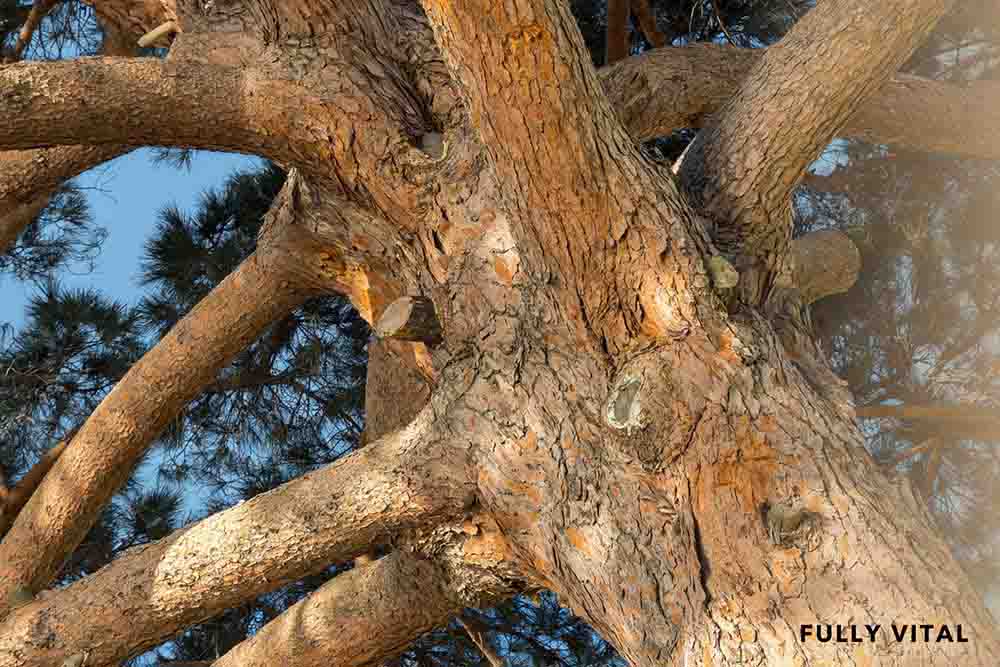
Pine bark extract has one small randomized trial on hair: Chinese menopausal women taking French maritime pine bark extract (sold as Pycnogenol) had higher hair density than those taking placebo. That is a single study, in one population, of one branded extract.
Here's what it found, and what the wider pine bark research says.

I LOVE MY HAIR NOW
FullyVital hair serum and hair vitamins made tremendous improvements in my hair. I truly love my hair now.
Dorit S., 
Key Takeaways
- One double-blind trial in 76 menopausal women found hair density rose 30% at 2 months and 23% at 6 months with a pine bark extract, and not with placebo.
- A trial in 112 women with photoaged facial skin found improved skin scores with 40 mg or 100 mg a day, which was a skin study, not a hair study.
- A Cochrane review of 27 trials across ten chronic disorders concluded that no definitive conclusions about efficacy or safety are possible.
What Is Pine Bark Extract?
Pine bark extract is a plant extract rich in proanthocyanidins, a type of antioxidant. The best-known form comes from French maritime pine.

Does Pine Bark Help Hair?
Possibly in one group of women, based on a single trial. It hasn't been tested widely, so we can't say who it helps.


Using Pine Bark Sensibly
- Don't expect it to suit everyone. The trial was in postmenopausal women.
- Ask your doctor before taking it, especially with medicines or health conditions.
- Track your hair over months, as the trial lasted 2 to 6 months.


What The Research Shows
Hair Density In Menopausal Women
In a single-center, double-blind, randomized, placebo-controlled study, 76 Han Chinese menopausal women in Shanghai took Pycnogenol 3 x 50 mg a day for 6 months. Hair density, measured by digital photographs and Trichoscan, rose 30% after 2 months and 23% after 6 months, and not in the placebo group. Scalp resting flux decreased, which the authors said might indicate improved microcirculation. They concluded it may have the potential to reduce hair loss in postmenopausal women (Cai et al., 2023).
Skin, Not Hair
In a randomized trial of 112 women with mild to moderate photoaging, 100 mg a day or 40 mg a day of French maritime pine bark extract was linked to lower photoaging scores and less pigmentation of age spots over 12 weeks. It measured facial skin, not hair (Furumura et al., 2012).
The Wider Evidence
A Cochrane review included 27 randomized trials with 1,641 participants across ten chronic disorders. The authors concluded that small sample sizes, few trials per condition, varied outcome measures and poor reporting mean no definitive conclusions about the efficacy or safety of pine bark extract supplements are possible. For most comparisons, studies did not report serious adverse events (Robertson et al., 2020). Hair loss was not among the conditions reviewed.
See also: Pygeum Bark for Hair: What the Research Shows · Tulsi (Holy Basil) for Hair: What the Research Shows
Maritime pine bark extract is one of the ingredients in FullyVital's Hair Revival Supplements. For how the evidence for each ingredient in the line stacks up, see our evidence-tier breakdown.
Frequently Asked Questions
Does pine bark help hair growth?
One trial in menopausal women found higher hair density than placebo. More research is needed.
How long does it take to see results?
The trial measured at 2 and 6 months.
Is pine bark extract safe?
A Cochrane review said no definitive conclusions about safety are possible. Talk to your doctor.
References
- Cai C, Zeng B, Lin L, et al. An oral French maritime pine bark extract improves hair density in menopausal women: A randomized, placebo-controlled, double blind intervention study. Health Sci Rep. 2023. PubMed
- Furumura M, Sato N, Kusaba N, et al. Oral administration of French maritime pine bark extract (Flavangenol(®)) improves clinical symptoms in photoaged facial skin. Clin Interv Aging. 2012. PubMed
- Robertson NU, Schoonees A, Brand A, et al. Pine bark (Pinus spp.) extract for treating chronic disorders. Cochrane Database Syst Rev. 2020. PubMed
Read more
Centella Asiatica (Gotu Kola) for Hair: What the Research Shows
What a hair cell study, a skin review and a face-cream study show about Centella asiatica, and what hasn't been tested for hair in people.
Read more
Fade: A Natural Approach to Hair Regrowth and Combating Gray Hair
Discover the power of fade as a natural hair regrowth technique. Fade gently transitions hair color, combating gray hair and hair loss. Learn how fade works and its historical significance. Explore...
Read more
