
Premenopausal vs. Perimenopausal Hair Loss: What's the Difference
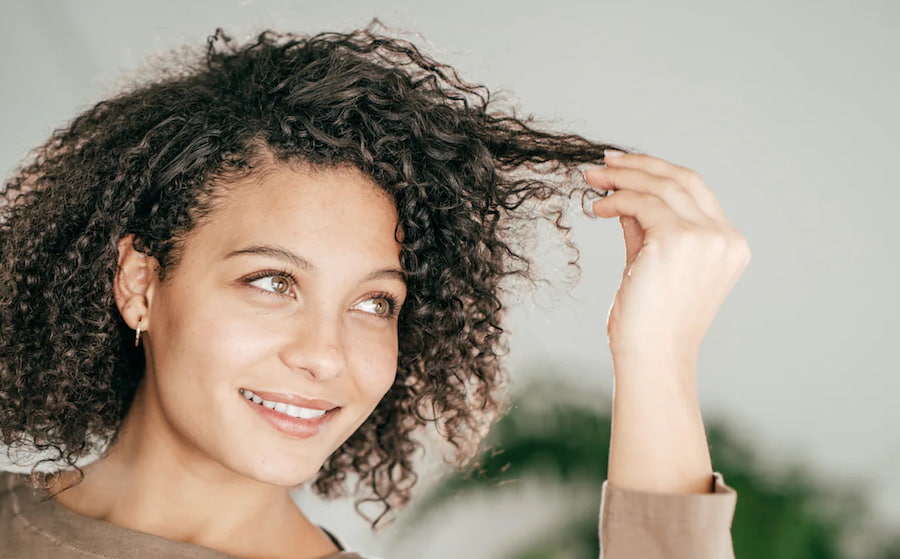
Premenopausal hair thinning usually has a different cause than perimenopausal thinning.
Premenopause means your hormone levels are still regular.
Perimenopause means estrogen has started to decline.
That decline is what raises the risk of hormone-related hair thinning.
Key fact: A pilot clinical trial found topical Adenosine increased anagen hair growth in women with female pattern hair loss.

What Is Premenopausal Hair Loss?
Premenopausal hair thinning usually has a different cause than perimenopausal thinning.
Premenopause is the life stage before hormone levels start shifting.
Hair loss during this stage is often linked to genetics, stress, or nutrient gaps.
It is less likely to be driven by declining estrogen.
Many women assume hair thinning means menopause is starting.
That assumption is not always correct.
Not every case of thinning before 40 is hormone related.
Ruling out other causes first can save you time and worry.
A simple blood panel can check thyroid function and iron levels.
Genetics play a role at every stage, not just after menopause.
A family history of thinning can shape your risk regardless of age.
FullyVital's Hair Revival Serum is designed to support the scalp at any hormone stage.

Premenopausal vs. Perimenopausal Hair Loss: What Is the Difference
These two life stages affect hair through different hormone patterns.
The table below breaks down the key differences.
| Life Stage | Typical Age Range | What Is Happening Hormonally |
|---|---|---|
| Premenopause | Teens through late 30s or early 40s | Regular menstrual cycles and stable estrogen |
| Perimenopause | Mid-to-late 30s through 40s, sometimes 50s | Estrogen levels start to fluctuate and decline |
| Menopause | Typically around age 51 | Periods stop and estrogen stays consistently low |
Many women move through these stages without a clear before-and-after moment.
Symptoms can overlap for years before periods actually stop.
Knowing which stage you are in can help you choose the right support.
For the full hormone mechanism behind perimenopausal thinning, see Why Does Hair Thin During Perimenopause? The Hormone Connection

Is Hair Loss a Sign of Premenopause?
Hair loss alone is not a reliable sign of premenopause.
Premenopause does not typically cause noticeable hormone-driven hair thinning.
Other signs, like irregular cycles or hot flashes, are more specific to perimenopause.
If hair loss is your only symptom, other causes are worth ruling out first.
A doctor can check thyroid levels, ferritin, and other common causes.
Diet changes, crash dieting, and high stress can all cause hair thinning at any age.
These causes can happen well before perimenopause begins.
Does Hair Loss Get Worse Closer to Menopause?
Hair thinning often becomes more noticeable as estrogen declines further.
The transition from perimenopause to menopause can bring the most visible changes.
This is when DHT sensitivity is often highest relative to estrogen.
Consistent support during this window can help maintain density over time. For a closer look at options, see our guide on menopause hair loss treatment.
Starting a routine before this window arrives can make the transition feel less abrupt.
None of this means thinning is inevitable for every woman.
What Helps With Early Hormone-Related Hair Thinning?
Supporting the scalp early can help regardless of which stage you are in.
Saw palmetto in the serum is designed to target the 5-alpha-reductase pathway linked to DHT.
A 2023 randomized, placebo-controlled study in Clinical, Cosmetic and Investigational Dermatology found saw palmetto reduced hair fall in androgenetic alopecia.
Adenosine in the serum is clinically studied to help support increased hair thickness.
A pilot, double-blind, randomized trial in The Journal of Dermatology found this effect in Japanese women with female pattern hair loss.
Rosemary oil in the serum is designed to help support scalp circulation.
A calm, consistent routine supports hair at any life stage.
A customer survey from April 2025 found 95% of users noticed less shedding within 20 days.
By day 90, 85% saw new hair growth and improved density.
Give the routine a full growth cycle before judging results.
Consistency is how you give your follicles a fair shot.
Most women notice visible change over 3 to 6 months of consistent use.
Most improvement builds gradually, not overnight.
"I see a lot of regrowth, and my curls are coming back. These products really work!"
Neha P.

Ready to Support Your Hair at Any Stage?
Hair thinning can happen before, during, or after the hormone shifts of perimenopause.
The Hair Revival Serum is designed to support the scalp at every stage.
Women earlier in this timeline often want to get ahead of the shift.
Women already in perimenopause often want targeted support for what is happening now.
Either way, a consistent scalp routine is a reasonable first step.
It works alongside a doctor's evaluation, not in place of one.
FullyVital is backed by a 120-day money-back guarantee.
Try it risk-free for 4 months, and if you are not seeing results, you will get a refund.
FullyVital is recommended by over 150 dermatologists and rated 4.7 out of 5 by more than 21,600 customers.
Each formula is manufactured without added hormones or drugs.
FullyVital's hair growth line is vegan and cruelty-free.
Every batch is third-party tested for heavy metals.
The serum and capsules are Non-GMO and made in a GMP-certified, FDA-registered facility in the USA.

For the bigger picture on what helps with thinning and shedding, see our guide to how to stop hair loss.
Frequently Asked Questions
Is hair loss a sign of premenopause?
Hair loss alone is not a reliable sign of premenopause.
Premenopause does not typically involve the hormone shifts that drive hair thinning.
Other symptoms, like cycle changes, point more specifically to perimenopause.
What is the difference between premenopausal and perimenopausal hair loss?
Premenopausal hair loss is usually linked to genetics, stress, or nutrient gaps.
It is not usually linked to hormones.
Perimenopausal hair loss is linked to declining estrogen and rising DHT sensitivity.
At what age does perimenopausal hair loss usually start?
Perimenopausal hair thinning often starts in the mid-to-late 30s or 40s.
The exact timing varies widely between women.
It can begin years before periods actually stop.
What helps with hair thinning before menopause?
Supporting the scalp early can help regardless of the underlying cause.
A doctor can help rule out non-hormonal causes like thyroid issues or low ferritin.
Ingredients like saw palmetto and Adenosine target hair thinning at the follicle level.
Can hair loss before age 40 be reversed?
Hair loss before age 40 can often improve once the underlying cause is addressed.
Nutrient deficiencies and stress-related shedding tend to respond well to consistent care.
A doctor can help identify the specific cause in your case.
Scientific References
The mechanisms and evidence described in this article are grounded in the published research below.
"Oral and Topical Administration of a Standardized Saw Palmetto Oil Reduces Hair Fall and Improves the Hair Growth in Androgenetic Alopecia Subjects, A 16-Week Randomized, Placebo-Controlled Study." Clinical, Cosmetic and Investigational Dermatology, 2023. View Study
Oura H, et al. "Adenosine increases anagen hair growth and thick hairs in Japanese women with female pattern hair loss: A pilot, double-blind, randomized, placebo-controlled trial." The Journal of Dermatology, 2008. View Study
Read more
Which Vitamins Help With Gray Hair? B12, Copper & More
Gray hair has real nutritional roots. Several vitamins and minerals play a direct role in how your follicles make pigment. When levels drop, the pigment pathway slows down. The good news is that...
Read more
Inside + Outside: Why Gray Hair Needs a Dual Approach
Gray hair has more than one root cause. That is why a single product rarely delivers the results you are looking for. An inside-out gray hair treatment works on two fronts at once. It supports y...
Read more
