
What Causes Hair to Turn Gray? The Melanocyte Story
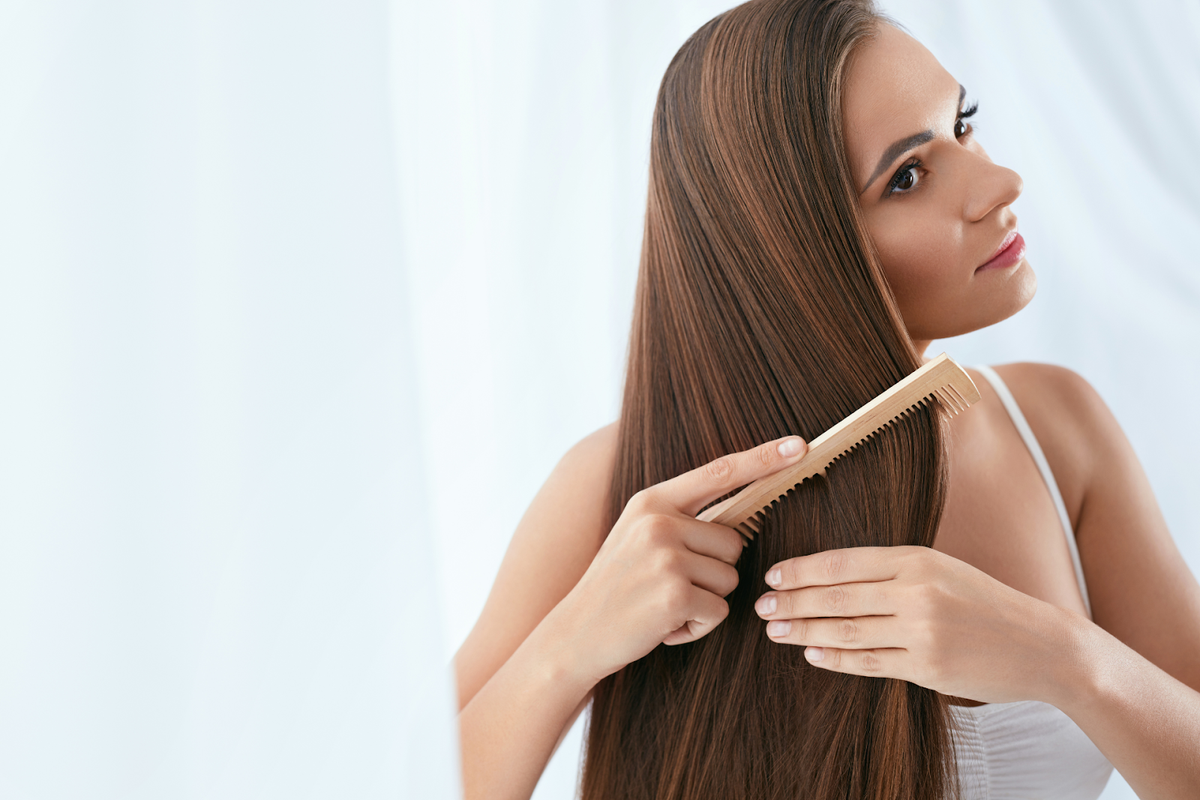
Hair turns gray when melanocytes (the cells that make pigment) slow down or stop working.
It is a biological process, not a character flaw.
And it is more addressable than most people think.
Key fact: According to a customer survey conducted by FullyVital in April 2025, 85% of customers reported noticing fewer grays after 90 days of consistent use.
Understanding the science is the first step to doing something real about it.

How Do Melanocytes Make Hair Color?
Melanocytes are specialized cells that live at the base of every hair follicle.
Their one job is to produce melanin — the pigment that gives your hair its color.
They do this through a process called melanogenesis (the making of melanin), which depends on two key ingredients: the amino acid tyrosine and the mineral copper.
Copper activates an enzyme called tyrosinase.
Tyrosinase converts tyrosine into melanin, strand by strand, follicle by follicle.
Without enough copper or tyrosine, that enzyme stalls — and so does your color.
If you want to support that process from the inside, the Anti-Gray Supplement is formulated with both copper and L-tyrosine to help keep that pathway running.

Why Does Hair Lose Pigment Over Time?
Melanocytes do not just slow down randomly — there are real biological reasons behind it.
FullyVital identifies five root causes that converge on a single outcome: the follicle makes less melanin.
1. Free Radicals and Oxidative Stress
Your body produces unstable molecules called free radicals every day.
When they build up faster than your body can clear them, they damage the melanocytes that make your color.
Research has linked this oxidative stress directly to hair graying.
2. Hydrogen Peroxide Buildup
Your hair follicles naturally produce small amounts of hydrogen peroxide as a byproduct of normal cell activity.
Young follicles have enzymes (particularly catalase) that break it down quickly.
As we age, catalase levels decline — and peroxide builds up, bleaching the hair from the inside.
This is one of the most well-studied mechanisms of graying, and it is one of the root causes the FullyVital system is designed to support.
3. Melanocyte Stem Cell Decline
Every melanocyte comes from a stem-cell reservoir in the follicle.
As that reservoir depletes, fewer replacement melanocytes are created.
Once those stem cells are gone from a follicle, that follicle produces white or gray strands.
4. Chronic Stress
Stress is not just a feeling — it triggers a cascade of hormones that accelerates follicle aging.
A 2020 study published in Nature showed that stress-related signaling can permanently deplete melanocyte stem cells in mice.
The human parallel is still being studied, but the biology points in the same direction.
5. Scalp Aging
Over time, the scalp environment becomes less nourishing for follicles.
Circulation slows, key nutrients thin out, and the follicle's support structure weakens.
All five of these causes work together — which is why a single-ingredient fix rarely does much on its own.

What Makes Hair Go Gray — Inside the Follicle
Every strand of hair goes through a growth cycle: it grows, rests, and sheds.
At the start of each new cycle, melanocytes must re-activate to pigment the incoming strand.
If the melanocyte is damaged, depleted, or starved of the nutrients it needs — copper, tyrosine, B-vitamins — it may not produce enough melanin to color that strand fully.
The result: a gray, silver, or white hair grows in instead of a pigmented one.
This is why supporting the biological conditions for melanin production — consistently, over a full growth cycle — is the approach that makes scientific sense.
The Anti-Gray Supplement provides copper (which contributes to normal hair pigmentation, per EU-authorized EFSA data), L-tyrosine as the melanin building block, and a B-complex to support healthy hair from within.
Can Anything Support the Pigment Process?
The science is clear on one thing: melanin production is a nutrient-dependent process.
Supply the right inputs, defend the follicle against the right stressors, and you give your melanocytes the best environment to keep doing their job.
That means addressing oxidative stress, peroxide buildup, and nutrient gaps — all at once.
FullyVital's supplement is designed to work at those root causes from the inside.
It delivers copper, L-tyrosine, zinc, selenium, biotin, and a multi-antioxidant complex — including GliSODin, a gliadin-protected form of SOD (superoxide dismutase, your body's master antioxidant enzyme) — to help support your body's own defenses against the oxidative stress tied to aging hair.
It also includes Rhodiola and L-theanine: adaptogens that support your resilience to everyday stress — the same stress research links to graying.
"I see much less grays in the mirror — I don't have to dye my hair for 14 weeks now." — Shana G.
Over 21,600 customers have tried FullyVital, and it carries a 4.7/5 average rating.
It is vegan, cruelty-free, drug- and hormone-free, non-GMO, and made in a GMP, FDA-registered facility in the USA.

How Long Does It Take to See a Difference?
Hair grows slowly — roughly half an inch per month.
That means meaningful change happens over growth cycles, not days.
A realistic timeline looks like this:
| Timeframe | What May Be Happening | What Customers Report |
|---|---|---|
| 30 days | Antioxidant and nutrient support building up | 92% reported softer, shinier hair (April 2025 survey) |
| 60 days | New growth cycle begins; pigment support active | 88% reported seeing new pigment at the roots (April 2025 survey) |
| 90 days | Full growth cycle with supported follicles | 85% reported noticing fewer grays (April 2025 survey) |
These are customer-reported results from a FullyVital survey, not a controlled clinical trial.
Individual results vary — genetics, age, and how long you've been graying all play a role.
But the biology is real: give your follicles the right support, consistently, and you give them a fair shot.

Your Next Step
You've been coloring your hair for years to mask what's happening at the root.
Now you know what's actually happening — and there is a more considered path.
FullyVital's Anti-Gray Supplement is formulated by Dr. Sandra Kaufmann, MD — a cellular biologist and longevity expert — to support your hair's natural melanin production from within.
It targets the five root causes of graying with clean, vegan, third-party tested ingredients.
And it comes with a 120-day money-back guarantee.
Try it risk-free for four months. If you're not seeing results, you'll get a full refund.
Frequently Asked Questions
What causes hair to turn gray?
Hair turns gray when melanocytes — the pigment-making cells in the hair follicle — slow down or stop producing melanin.
This happens due to a combination of factors: oxidative stress, hydrogen peroxide buildup in the follicle, declining melanocyte stem cells, chronic stress, and scalp aging.
How do melanocytes make hair color?
Melanocytes produce melanin through a process that depends on copper and the amino acid tyrosine.
Copper activates an enzyme called tyrosinase, which converts tyrosine into melanin — the pigment that gives each strand its color.
Why does hair lose pigment over time?
Hair loses pigment as melanocytes age, their nutrient supply thins, oxidative damage builds up, and their stem-cell reservoir depletes.
Hydrogen peroxide buildup in the follicle also bleaches the strand from the inside as the enzyme that normally clears it (catalase) declines with age.
Can nutrients really support natural hair color?
Yes — melanin production is a nutrient-dependent process.
Copper is EU-authorized for its contribution to normal hair pigmentation. L-tyrosine is the direct building block of melanin. Selenium and zinc support antioxidant defenses and normal hair health.
Supplying these consistently, over a full growth cycle, helps give melanocytes the inputs they need.
How long does it take for an anti-gray supplement to work?
Because hair grows slowly, meaningful change takes at least one full growth cycle — roughly 60 to 90 days.
In a FullyVital customer survey (April 2025), 85% of customers reported noticing fewer grays after 90 days of consistent use.
Scientific References
The mechanisms and evidence described in this article are grounded in the published research below.
Wood JM, et al. "Senile hair graying: H₂O₂-mediated oxidative stress affects human hair color by blunting methionine sulfoxide repair." FASEB Journal, 2009.
Zhang B, Ma S, Rachmin I, et al. "Hyperactivation of sympathetic nerves drives depletion of melanocyte stem cells." Nature, 2020;577(7792):676–681.
EFSA Panel on Dietetic Products, Nutrition and Allergies. "Copper and normal hair pigmentation." EFSA Journal, 2010.
Tobin DJ. "Aging of the hair follicle pigmentation system." International Journal of Trichology, 2009.
Kauser S, et al. "Melanocyte biology." Journal of Investigative Dermatology, 2005.


%20slow%20down%20or%20stop%20working.%0AIt%20is%20a%20biological%20process,%20not%20a%20character%20flaw.%0AAnd%20it%20is%20more%20addressable%20than%20most%20people%20think.%0AKey%20fa...)