
Best Ingredients for Postpartum Hair Thinning (Evidence Reviewed)
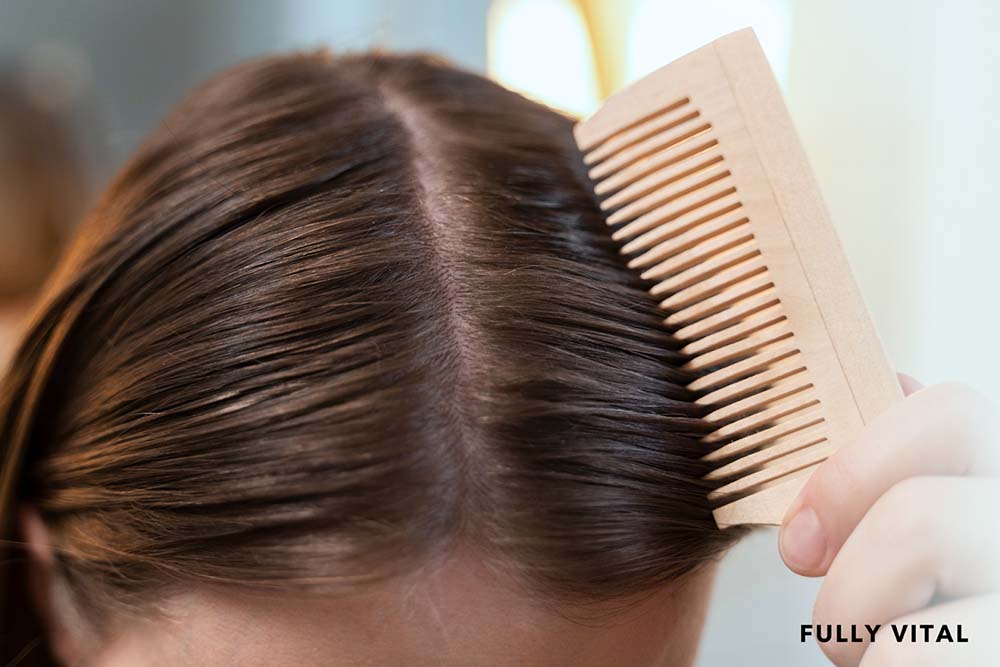
A handful of scalp serum ingredients have real published evidence.
Postpartum shedding is hormone-driven, not the same as genetic pattern loss.
That difference matters when choosing ingredients.
Here is what the evidence actually supports.
Key fact: A published clinical trial found topical adenosine increased the proportion of thick, healthy-looking hair strands over time.

Which Serum Ingredients Have the Strongest Evidence?
Adenosine has some of the more established published research behind it.
FullyVital's Density Scalp Treatment is formulated with adenosine at a studied concentration.
A clinical trial published in The Journal of Dermatology found topical adenosine increased the proportion of thick hair strands.
Rosemary oil is another ingredient with real comparative research behind it.
A 2015 clinical trial in Skinmed found rosemary oil produced comparable hair count results to a leading topical treatment over 6 months.
Both studies were conducted in people with genetic pattern hair loss, not postpartum shedding specifically.
The underlying mechanism, supporting the hair follicle's growth phase, is still relevant to postpartum recovery.
Why Postpartum Shedding Needs a Different Approach Than Pattern Loss
Postpartum shedding is driven by a hormone shift, not androgen sensitivity at the follicle.
Ingredients built to block DHT are designed for genetic pattern baldness, not this pattern.
Circulation-focused and follicle-support ingredients are more directly relevant here.
Caffeine and copper tripeptide-1 in the serum are designed to help support the follicle environment during this window.

Evidence-Tier Comparison
| Ingredient | Evidence Tier | What It's Shown |
|---|---|---|
| Adenosine | Strong | Increased thick-hair ratio in published RCTs |
| Rosemary Oil | Moderate | Comparable hair count results to a leading topical treatment |
| Saw Palmetto Extract | Moderate | Targets a hormone-related pathway, mainly studied for pattern loss |
| Copper Tripeptide-1 | Preclinical | Increased follicle activity in lab-based studies |
Strong and Moderate tiers have real human trial data behind them.
Preclinical means the evidence comes from lab or cell-based studies, not yet human trials.
None of these tiers mean instant results.
Each ingredient works alongside your body's own recovery timeline, not ahead of it. If you're also weighing supplements, we cover prenatal vitamins and hair growth in a separate article.
"I see a lot of regrowth, and my curls are coming back. These products really work!"
Neha P.

A Note on Breastfeeding Safety
Topical scalp products generally carry lower systemic exposure than an oral supplement.
No formula, including this one, has been specifically tested in breastfeeding women.
Saw palmetto works through a hormone-related pathway and is worth flagging to your doctor specifically.
You can read the full ingredient-by-ingredient breakdown in Is It Safe to Use Hair Growth Products While Breastfeeding?
Your doctor or lactation consultant should confirm what is right for your specific situation.
Bring the full ingredient list from any product you are considering to that conversation.
This is a quick step that removes most of the guesswork.

Give It a Real Chance to Work
A full growth cycle, generally 3 to 6 months, is the realistic window to judge any serum.
The Density Scalp Treatment is a simple daily step to add to your routine.
FullyVital is backed by a 120-day money-back guarantee.
Try it risk-free for 4 months, and if you are not seeing results, you will get a refund.
FullyVital is recommended by over 150 dermatologists and rated 4.7 out of 5 by more than 21,600 customers.
Each formula is manufactured without added hormones or drugs.
FullyVital's hair growth line is vegan and cruelty-free.
Every batch is third-party tested for heavy metals.
The serum and capsules are Non-GMO and made in a GMP-certified, FDA-registered facility in the USA.

Frequently Asked Questions
What is the best ingredient for postpartum hair thinning?
Adenosine has some of the strongest published evidence among topical ingredients.
Rosemary oil also has real comparative research behind it.
Both target the hair growth cycle rather than a hormone-blocking pathway.
Is a hair growth serum a good option for postpartum hair loss?
A topical serum can support the scalp environment during postpartum recovery.
It carries lower systemic exposure than an oral supplement.
No formula has been specifically tested in breastfeeding women.
Should postpartum hair loss ingredients be different from pattern baldness ingredients?
Yes, postpartum shedding is driven by a hormone shift, not androgen sensitivity.
DHT-blocking ingredients are built for genetic pattern baldness, not this pattern.
Circulation and follicle-support ingredients are more directly relevant here.
Scientific References
The mechanisms and evidence described in this article are grounded in the published research below.
Iwabuchi T, Ideta R, Ehama R, Yamanishi H, Iino M, Nakazawa Y, Kobayashi T, Ohyama M, Kishimoto J. "Topical adenosine increases the proportion of thick hair in Caucasian men with androgenetic alopecia." The Journal of Dermatology, 2016;43(5):567-570. View Study
Panahi Y, Taghizadeh M, Marzony ET, Sahebkar A. "Rosemary oil vs minoxidil 2% for the treatment of androgenetic alopecia: a randomized comparative trial." Skinmed, 2015. View Study
Read more
Why Does Postpartum Hair Loss Happen? The Hormone Drop Explained
Postpartum hair loss is caused by a sudden estrogen drop after birth. During pregnancy, high estrogen keeps hair in its growth phase longer than usual. After birth, that hormone drops fast. All ...
Read more
Act+Acre and FullyVital both sell scalp serums for thinning hair. Act+Acre centers its formula on a Swiss apple stem cell extract. FullyVital centers its system on a wider mix of published, root-...
Read more
