
Why Does Postpartum Hair Loss Happen? The Hormone Drop Explained
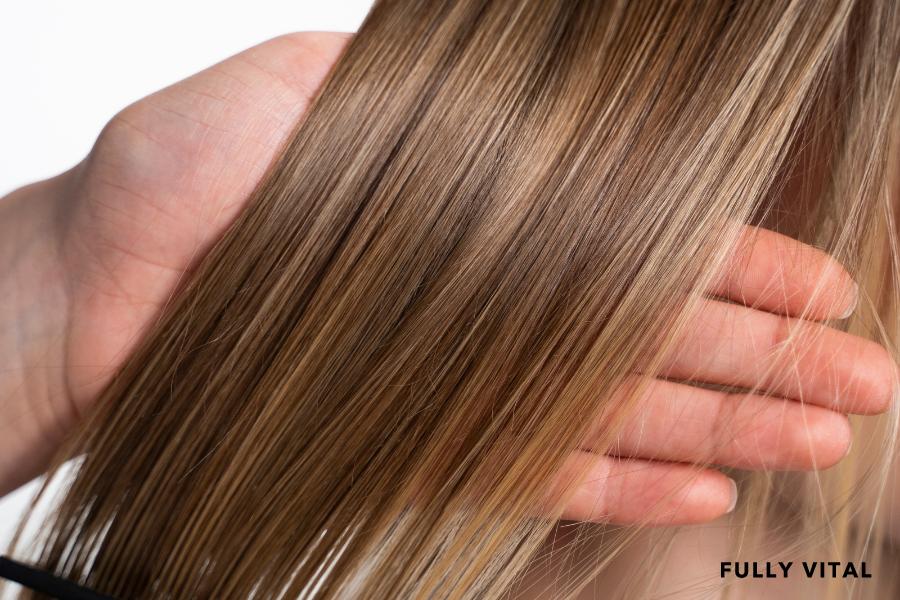
Postpartum hair loss is caused by a sudden estrogen drop after birth.
During pregnancy, high estrogen keeps hair in its growth phase longer than usual.
After birth, that hormone drops fast.
All the delayed shedding happens at once.
Key fact: Elevated estrogen during pregnancy keeps more scalp hair in its growth phase, which is why the delayed shedding catches up all at once after birth.

What Causes Postpartum Hair Loss?
Postpartum hair loss is caused by the hormone shift that follows birth.
Estrogen rises steadily throughout pregnancy.
That rise keeps more hair follicles in the active growth phase than normal.
FullyVital's Density Scalp Treatment is designed to support your scalp through this hormonal transition.
Estrogen then drops sharply within days of delivery.
That drop pushes a large group of follicles into the resting phase together.
Why Does the Drop Cause Shedding Weeks Later?
Hair in the resting phase stays in place for roughly 2 to 3 months before shedding.
The delay is built into the hair cycle itself.
This is why shedding often starts around week 8 to 12, not right after birth.
The medical name for this pattern is postpartum telogen effluvium.
It is the same basic mechanism as telogen effluvium from other major stressors.
Pregnancy and birth are simply the specific trigger in this case.
Other common triggers include major illness, surgery, and prolonged emotional stress.
The underlying mechanism, hair follicles resetting together, is the same across all of them.
Knowing the mechanism does not make the shedding stop faster. If you're wondering how long it lasts, our postpartum hair loss timeline covers what's typical and when to check in with a doctor.
It can still make the experience feel less alarming.
You are not the only one going through this right now.

What Else Contributes to Postpartum Shedding?
Sleep deprivation adds physical stress on top of the hormone shift.
Breastfeeding involves its own hormonal changes that can extend the timeline slightly. If you are curious when postpartum hair shedding stop happens for most women, we cover this in a separate article.
Iron and vitamin D levels, often lower after pregnancy, can also play a role.
Thyroid function can shift in the months after birth as well.
None of these factors cause postpartum shedding on their own.
They can make an already-sensitive period feel more intense.
A simple blood panel can check iron and thyroid levels if you want more clarity.
Addressing a real deficiency can support your overall recovery, hair included. If the shedding feels unusual or excessive, our article on postpartum hair loss vs alopecia can help you figure out when to see a doctor.
"My bald spot is gone and I see so many new baby hairs! I feel so youthful!"
Dani H.

Can Postpartum Hair Loss Happen Without Breastfeeding?
Yes, postpartum hair loss happens regardless of feeding method.
The estrogen drop after birth happens whether or not you breastfeed.
Breastfeeding may shift the exact timeline slightly for some women.
It is not the underlying cause of the shedding itself.
This is a common point of confusion worth clearing up directly.
Bottle-feeding mothers sometimes feel dismissed because the shedding gets framed as a breastfeeding side effect online.
The hormonal cause is the same either way.
Adoptive mothers who did not carry the pregnancy do not experience this specific pattern.
The trigger is tied to the hormone shift of pregnancy and birth, not parenting itself.

Supporting Your Hair Through This Mechanism
A consistent scalp and nutritional routine can support your hair while your hormones stabilize. For a closer look at what actually helps, we cover the best ingredients for postpartum hair thinning in a dedicated breakdown.
This does not speed up the biological timeline itself.
Rosemary oil and caffeine in the serum are designed to help support scalp circulation.
The Density Scalp Treatment is a simple daily step during this window.
FullyVital is backed by a 120-day money-back guarantee.
Try it risk-free for 4 months, and if you are not seeing results, you will get a refund.
FullyVital is recommended by over 150 dermatologists and rated 4.7 out of 5 by more than 21,600 customers.
Each formula is manufactured without added hormones or drugs.
FullyVital's hair growth line is vegan and cruelty-free.
Every batch is third-party tested for heavy metals.
The serum and capsules are Non-GMO and made in a GMP-certified, FDA-registered facility in the USA.

Frequently Asked Questions
What causes postpartum hair loss?
Postpartum hair loss is caused by a sharp estrogen drop after birth.
That drop pushes many hair follicles into a resting phase at once.
Hair in that resting phase sheds a few months later.
Can postpartum cause hair loss even without complications?
Yes, postpartum hair loss happens after typical, uncomplicated births too.
It is caused by a normal hormone shift, not a birth complication.
Nearly all postpartum women experience some degree of shedding.
Does breastfeeding cause postpartum hair loss?
The estrogen drop after birth is the underlying cause of postpartum hair loss.
Postpartum hair loss happens whether or not you breastfeed.
Breastfeeding hormones may shift the exact timeline slightly for some women.
Scientific References
The mechanisms and evidence described in this article are grounded in the published research below.
American Academy of Dermatology Association. "Hair Loss: Who Gets and Causes." Clinical patient education resource. View Resource
Read more
Prenatal Vitamins and Hair Growth: Do They Help After Birth?
Prenatal vitamins are not designed to actively regrow hair. They are built to fill nutrient gaps during pregnancy and nursing. That is a different job than targeting postpartum shedding directly....
Read more
Best Ingredients for Postpartum Hair Thinning (Evidence Reviewed)
A handful of scalp serum ingredients have real published evidence. Postpartum shedding is hormone-driven, not the same as genetic pattern loss. That difference matters when choosing ingredients. ...
Read more
