What Causes Gray Hair? The Complete, Evidence-Based Guide
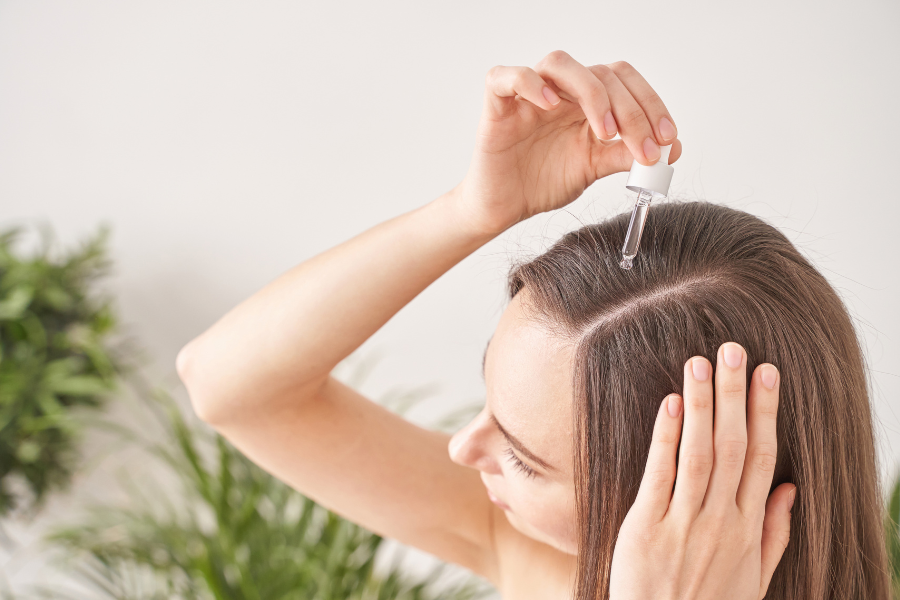
Gray hair happens when the cells inside your hair follicle, called melanocytes, slow down or stop making pigment.
It is a normal part of aging for almost everyone, but the timing and speed of it depend on a mix of genetics, oxidative stress, nutrient status, stress, and a few other factors that are well documented in the research.
This guide covers what actually causes gray hair, when it typically starts, whether it can be slowed or reversed, and when it is worth mentioning to a doctor.
Key fact: Every hair color change happens at the root, inside the follicle, during active growth. A strand that has already grown out of your scalp is dead tissue and cannot change color on its own, no matter what stress or shock it goes through.

The Short Answer
- Gray hair happens when melanocytes, the pigment cells in your hair follicle, produce less melanin or stop producing it entirely.
- The main drivers are genetics, age-related loss of melanocyte stem cells, oxidative stress and hydrogen peroxide buildup, chronic stress, and nutrient status.
- Most people notice their first grays in their 30s, though premature graying can start much earlier and has its own medical definition.
- Gray hair is not fully reversible on demand, but supporting the biology behind it, consistently and over time, is where the real science points.
What Is Gray Hair, Really?
Hair color comes from melanin, a pigment produced by cells called melanocytes that live inside each hair follicle.
As long as melanocytes keep working, new hair grows in with color. When they slow down, new hair grows in lighter.
When they stop entirely, new hair grows in with no pigment at all, which is what we see as gray or white.
The medical term for gray hair is canities. When it starts earlier than expected for a person's background, it is called premature canities.
What Causes Gray Hair?
Graying is not caused by one single thing. Research points to several mechanisms that usually work together.
Genetics
Genetics is the single biggest factor in when you start going gray. If your parents grayed early, you are more likely to as well.
But genetics sets a tendency, not a fixed date, which is why two people with similar family history can still gray at noticeably different rates.
Melanocyte Stem Cell Depletion
Every hair growth cycle draws on a reserve of melanocyte stem cells to make fresh, functional melanocytes.
That reserve shrinks with age. Once it runs low, the follicle can no longer replace worn-out melanocytes, and new hair grows in without color.
This is considered one of the core drivers of ordinary age-related graying.
Oxidative Stress and Hydrogen Peroxide Buildup
Hair follicles naturally produce small amounts of hydrogen peroxide. An enzyme called catalase normally breaks it down before it causes harm.
As catalase activity declines with age, peroxide can build up and bleach hair from within, which is chemically similar to how peroxide-based hair dye works, except it happens naturally inside the follicle.
This mechanism is documented in a widely cited 2009 study in the FASEB Journal.
Chronic Stress
The stress and graying link is real, but it does not work the way most people assume.
A 2021 study published in eLife mapped individual hairs and found that pigment loss tracked with periods of life stress, and that some hairs regained pigment when stress dropped.
Separate research published in Nature in 2020 found that hyperactivation of the sympathetic nervous system under stress can deplete the melanocyte stem cells responsible for pigment production.
Stress does not turn hair gray overnight. It appears to influence the process at the root, over the timescale of the hair's growth cycle.
Nutrient Status
A 2017 case-control study found that people with premature graying had significantly lower serum levels of biotin, vitamin B12, and folate compared to people whose hair grayed at a typical age.
Copper is also required for tyrosinase, the enzyme that converts the amino acid tyrosine into melanin, which is why copper deficiency is tied to pigment loss.
Smoking
A study published in the BMJ found smokers were significantly more likely to show premature graying and hair loss compared to non-smokers, a finding the researchers suggested could double as a health education tool against smoking.
Underlying Medical Conditions
A 2018 review in the International Journal of Trichology notes that premature graying has been associated with autoimmune conditions and certain premature aging syndromes.
IT recommends that people with significant, early-onset graying be evaluated for associated metabolic or autoimmune disorders.
This does not mean gray hair is a sign of illness for most people. It means that sudden, patchy, or unusually early graying is worth mentioning to a doctor, particularly alongside other symptoms.
At What Age Does Hair Normally Turn Gray?
Most people notice their first gray hairs sometime in their 30s, though this varies widely by genetics and ethnicity.
When graying starts well before that, it has a specific medical definition.
The 2018 International Journal of Trichology review defines premature graying as starting before age 20 in Caucasian populations and before age 30 in the African American population, with Asian populations commonly cited around age 25.
Premature graying is not automatically a sign of a health problem. It is driven by the same mechanisms as later-life graying, just showing up earlier for that individual.
Can Gray Hair Be Reversed?
Sometimes, to a degree, under the right conditions, but there is no ingredient or product proven to guarantee full reversal for everyone.
The most direct evidence comes from the 2021 eLife stress study, which documented natural repigmentation in individual hairs linked to stress reduction.
And from research on topical actives like PTP-20, which has shown increased melanin production in lab-cultured melanocytes and ex-vivo hair follicle samples.
The honest summary of where the science stands: reversal is biologically possible in some cases, more likely to be partial than total.
It is dependent on consistently supporting the follicle over a full hair growth cycle, generally two to three months at minimum.
For a full ingredient-by-ingredient breakdown of what has real evidence behind it, see our gray hair ingredients ranked by evidence.
Can You Prevent or Slow Gray Hair?
You cannot override genetics, but several of the mechanisms behind graying are addressable.
- Manage chronic stress. Given the documented link between stress and melanocyte stem cell depletion, ordinary stress management (sleep, exercise, reducing chronic stressors where possible) is a reasonable, low-risk part of any approach.
- Support antioxidant defenses. Since oxidative stress and hydrogen peroxide buildup are core mechanisms, nutrients and compounds that support the body's antioxidant systems are a logical target, though the strength of evidence varies by ingredient.
- Check your nutrient status. Given the documented link to biotin, B12, and folate levels, correcting a genuine deficiency (ideally confirmed with bloodwork) is one of the more directly evidence-supported steps available.
- Avoid smoking. The documented association between smoking and premature graying makes this one of the more straightforward, controllable factors.
- Be consistent. Because hair grows in visible increments only over weeks and months, any approach needs a full growth cycle before you can fairly judge whether it is working.
When Gray Hair Might Signal Something Else
For most people, gray hair is simply a sign of normal aging.
It is worth a conversation with a doctor when graying is sudden, patchy, starts unusually early, or shows up alongside other symptoms like fatigue, skin changes, or unexplained weight changes.
The 2018 International Journal of Trichology review specifically recommends screening for associated metabolic or autoimmune conditions in cases of significant premature graying. This article is educational and does not replace a medical evaluation.
Common Myths Worth Clearing Up
A few claims about gray hair get repeated so often they start to sound like fact.
Plucking one gray hair does not cause more to grow in its place. Stress cannot turn your hair gray overnight, since a fully grown strand cannot change color.
Dyeing your hair does not accelerate graying, since dye works on the strand, not the follicle. For the full list, with the research behind each correction, see our gray hair myths vs. facts page.
What Actually Helps: A Science-Based Approach
Because graying has several contributing mechanisms, the most evidence-aligned approach addresses more than one of them at once, rather than relying on a single ingredient.
That generally means combining internal support (nutrients that feed the melanin pathway and defend against oxidative stress) with external support (actives applied directly to the scalp, where the follicle biology happens), and giving the combination a full growth cycle to show results.
FullyVital's Anti-Gray system was built around this multi-mechanism approach, combining copper (the only nutrient with an EU-authorized claim specifically for hair pigmentation) with antioxidant and peptide actives studied for their role in the graying process.
No single ingredient in any product, at any evidence tier, has been shown to reverse graying entirely on its own.
That is the honest state of the science, and it is why consistency across a full system tends to matter more than any one ingredient.
Frequently Asked Questions
What causes gray hair?
Gray hair happens when melanocytes, the pigment-producing cells in the hair follicle, slow down or stop making melanin.
The main contributing factors are genetics, age-related depletion of melanocyte stem cells, oxidative stress and hydrogen peroxide buildup, chronic stress, and nutrient status.
Why does hair turn gray as you age?
With age, the reserve of melanocyte stem cells that replenish pigment-producing cells gradually shrinks, and the enzyme that breaks down naturally occurring hydrogen peroxide in the follicle becomes less active.
Together, these changes reduce the follicle's ability to keep producing pigment.
At what age does hair normally start turning gray?
Most people notice their first gray hairs in their 30s, though this varies by genetics and ethnicity.
Graying that starts before age 20 in Caucasian populations or before age 30 in the African American population is classified as premature graying.
Can gray hair be reversed naturally?
Partial, natural repigmentation has been documented in research, particularly linked to stress reduction. Full reversal is not guaranteed or typical.
The most evidence-aligned approach supports the underlying biology consistently over a full hair growth cycle rather than expecting a quick fix.
Is going gray purely genetic?
No. Genetics sets a real tendency, but research also ties premature graying to nutrient deficiencies, oxidative stress, chronic stress, and smoking, all of which are separate, addressable factors alongside genetics.
Should I be worried if I am graying early?
Not automatically. Premature graying is usually just an earlier version of the normal aging process.
It is worth mentioning to a doctor if it is sudden, patchy, or comes with other symptoms, since research has linked significant premature graying to certain autoimmune and metabolic conditions that are worth ruling out.
Scientific References
This guide is grounded in the following published research and regulatory opinions.
Kumar AB, Shamim H, Nagaraju U. "Premature Graying of Hair: Review with Updates." International Journal of Trichology, 2018;10(5):198-203. DOI: 10.4103/ijt.ijt_47_18
Rosenberg AM, Rausser S, Ren J, et al. "Quantitative mapping of human hair greying and reversal in relation to life stress." eLife, 2021;10:e67437. (Columbia University)
Zhang B, Ma S, Rachmin I, et al. "Hyperactivation of sympathetic nerves drives depletion of melanocyte stem cells." Nature, 2020;577(7792):676-681.
Wood JM, et al. "Senile hair graying: H₂O₂-mediated oxidative stress affects human hair color by blunting methionine sulfoxide repair." FASEB Journal, 2009;23(7):2065-2075.
Daulatabad D, Singal A, Grover C, Chhillar N. "Prospective analytical controlled study evaluating serum biotin, Vitamin B12, and folic acid in patients with premature canities." International Journal of Trichology, 2017;9(1):19-24.
Mosley JG, Gibbs AC. "Premature grey hair and hair loss among smokers: a new opportunity for health education?" BMJ, 1996;313(7072):1616.
EFSA Panel on Dietetic Products, Nutrition and Allergies. Scientific Opinion on health claims related to copper, including maintenance of normal hair pigmentation. EFSA Journal, 2009;7(9):1211.
Tobin DJ. "Aging of the hair follicle pigmentation system." International Journal of Trichology, 2009;1(2):83-93.