
Gray Hair Myths vs. Facts: What the Research Actually Says

Gray hair advice is full of confident claims that don't hold up once you check them against the research.
Some of these myths are harmless. Others lead people to waste money or blame themselves for something genetics and biology were always going to do anyway.
Key fact: A single hair strand is dead keratin once it grows out of the follicle. It cannot change color on its own. Every real color change happens at the root, during active growth, which is why "overnight graying" is a myth but stress-linked graying over weeks and months is not.
Here are the most common gray hair claims, checked against what the research actually says.

Myth: Plucking a Gray Hair Makes More Grow Back
Pulling out one gray hair causes two or three more to grow in its place.
Each hair follicle operates independently and produces exactly one strand at a time. Plucking a hair from one follicle has no biological way to affect the melanocyte activity in neighboring follicles. What actually happens is simpler: the grays you already have keep growing in on their own schedule, so it looks like "more" showed up. Repeated plucking from the same follicle can eventually damage it, which is a real reason to avoid the habit, just not the one most people think.
Myth: Stress Can Turn Your Hair Gray Overnight
A single stressful event, like a shock or a bad night, can turn a full head of hair gray by morning.
A strand of hair is dead tissue once it leaves the follicle. It has no biological mechanism to change color after it has grown out. The stress-graying link is real, but it works differently than the myth suggests: a 2021 study published in eLife mapped individual hairs and found that pigment changes tracked with periods of life stress at the root, over the timescale of the hair's growth cycle, not instantly across the whole head. The same study documented the reverse, too: some hairs regained pigment when stress dropped.
Myth: Going Gray Is Purely Genetic, and Nothing Else Matters
If your parents went gray early, there's nothing you can do about your own timeline.
Genetics sets a real tendency, but it isn't the only variable. Research has tied premature graying to lower serum levels of biotin, B12, and folate compared to people with normally-timed graying, and separately linked chronic stress to depletion of the melanocyte stem cells that produce pigment. Oxidative stress and hydrogen peroxide buildup in the follicle are additional, addressable mechanisms sitting alongside genetics, not replacing it.
Myth: Dyeing Your Hair Makes It Gray Faster
Regularly coloring your hair accelerates the graying process underneath.
Hair dye works on the strand itself, coating or penetrating the hair shaft. It has no access to the melanocytes producing pigment at the root, so there's no direct mechanism for dye to influence future graying. Repeated harsh chemical processing can damage hair texture and strength over time, which is a legitimate concern, but it is a separate issue from pigment production.
Myth: Only Older People Go Gray
Gray hair is something that only happens once you're well into middle age or older.
Premature graying, medically called premature canities, is a recognized condition with defined onset ages: generally before 20 in white populations, before 25 in Asian populations, and before 30 in Black populations. It's driven by the same mechanisms as later-life graying (genetics, nutrient status, oxidative stress) just showing up earlier for that individual.
Myth: All Anti-Gray Supplements and Serums Work the Same Way
Any product labeled "anti-gray" or "clinically studied" is backed by the same level of evidence.
The evidence behind gray hair ingredients ranges widely: from formal EU regulatory review (EFSA-authorized claims, which only copper has specifically for pigmentation), to independent peer-reviewed mechanistic research, down to a single supplier's unpublished internal testing. "Clinically studied" can describe a large controlled trial or a single lab dish experiment, and the label alone doesn't tell you which.
Myth: Once You Reverse Gray Hair, It's Permanent
If a product or routine helps bring back pigment, that result is locked in for good, even if you stop.
The underlying causes of graying, including declining catalase activity, oxidative stress, and age-related melanocyte stem cell loss, don't resolve on their own just because pigment temporarily returned. Supporting the follicle is an ongoing process, not a one-time fix, which is why consistency over a full growth cycle (and staying consistent afterward) matters more than a single short course of any product.
Myth: Gray Hair Is Just a Cosmetic Issue With No Real Biology Behind It
Graying is a vague, poorly-understood side effect of aging with no real science behind why it happens.
Graying is a well-studied, specific biological process. It traces back to declining tyrosinase activity, shrinking melanocyte stem cell reserves, hydrogen peroxide buildup from falling catalase levels, and oxidative stress on the follicle. Regulators like EFSA have formally reviewed and authorized specific nutrient claims (copper for pigmentation) based on that biology, which is a meaningfully higher bar than a vague cosmetic explanation.
Frequently Asked Questions
Is it true that pulling one gray hair causes more to grow back?
No. Each hair follicle works independently, so plucking one gray hair cannot affect pigment production in neighboring follicles. It just looks that way because other grays nearby were already growing in on their own timeline.
Can stress really turn hair gray overnight?
No. A grown-out strand is dead tissue and can't change color. Research does show stress is linked to graying, but the change happens at the root over the timescale of weeks to months during active hair growth, not instantly.
Will dyeing my hair make it go gray faster?
No. Hair dye acts on the strand itself and has no access to the melanocytes at the root that control pigment production, so it has no direct mechanism to speed up graying.
Does gray hair reversal stay permanent once it happens?
Not automatically. The biological processes behind graying are ongoing and age-related, so consistent, continued support is generally needed to maintain pigment rather than expecting a one-time, permanent fix.
Is going gray purely determined by genetics?
No. Genetics sets a real tendency, but research also ties premature graying to nutrient deficiencies, oxidative stress, and chronic stress, all of which are separate, addressable factors alongside genetics.
Scientific References
The myths and facts on this page are checked against the following sources.
Rosenberg AM, Rausser S, Ren J, et al. "Quantitative mapping of human hair greying and reversal in relation to life stress." eLife, 2021;10:e67437. (Columbia University)
EFSA Panel on Dietetic Products, Nutrition and Allergies. Scientific Opinion on health claims related to copper, including maintenance of normal hair pigmentation. EFSA Journal, 2009;7(9):1211.
Daulatabad D, Singal A, Grover C, Chhillar N. "Prospective analytical controlled study evaluating serum biotin, Vitamin B12, and folic acid in patients with premature canities." International Journal of Trichology, 2017;9(1):19-24.
Zhang B, Ma S, Rachmin I, et al. "Hyperactivation of sympathetic nerves drives depletion of melanocyte stem cells." Nature, 2020;577(7792):676–681.
Wood JM, et al. "Senile hair graying: H₂O₂-mediated oxidative stress affects human hair color by blunting methionine sulfoxide repair." FASEB Journal, 2009;23(7):2065–2075.
Tobin DJ. "Aging of the hair follicle pigmentation system." International Journal of Trichology, 2009;1(2):83–93.
Read more
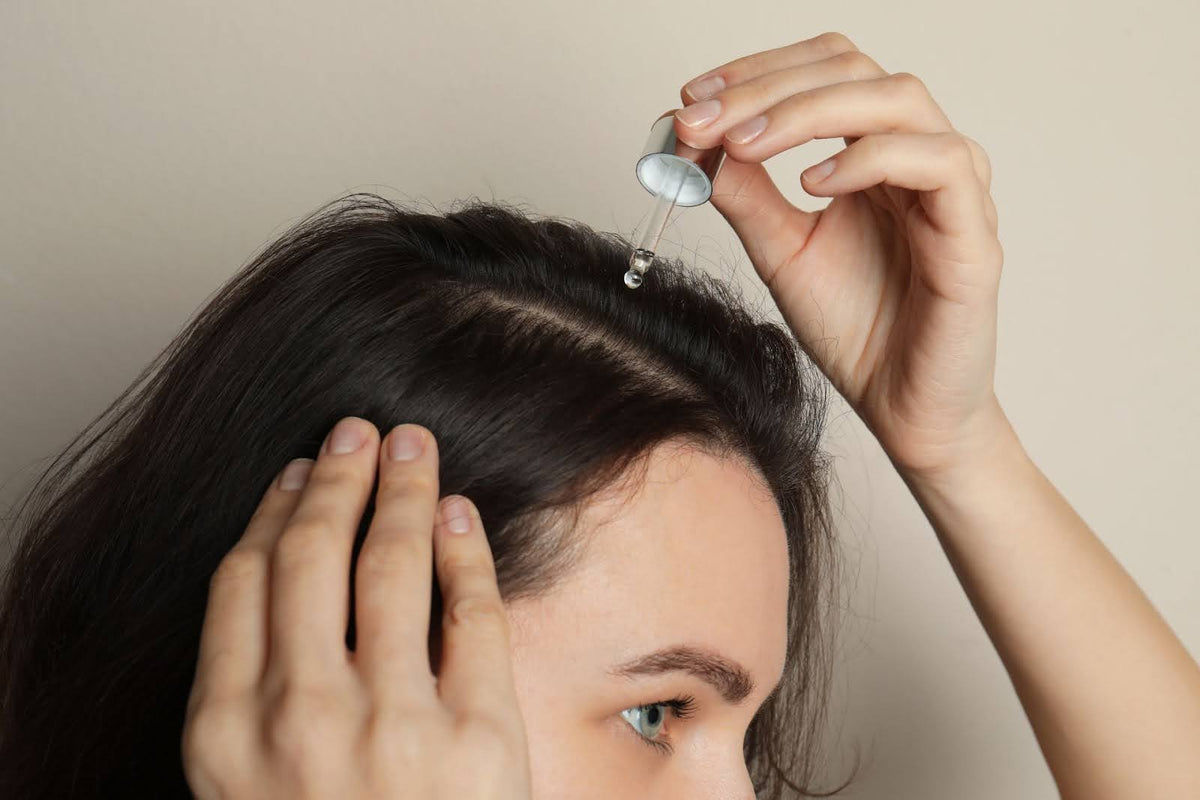
Anti-Gray Hair Ingredients: What Actually Works
Your hair does not go gray overnight. It happens gradually, through biological processes that begin deep inside the follicle. The right ingredients can support those processes. Not all of them work...
Read more
What Causes Gray Hair? The Complete, Evidence-Based Guide
Gray hair happens when the cells inside your hair follicle, called melanocytes, slow down or stop making pigment. It is a normal part of aging for almost everyone, but the timing and speed of it de...
Read more
