
What Causes Sudden Gray Hair? When to See a Doctor
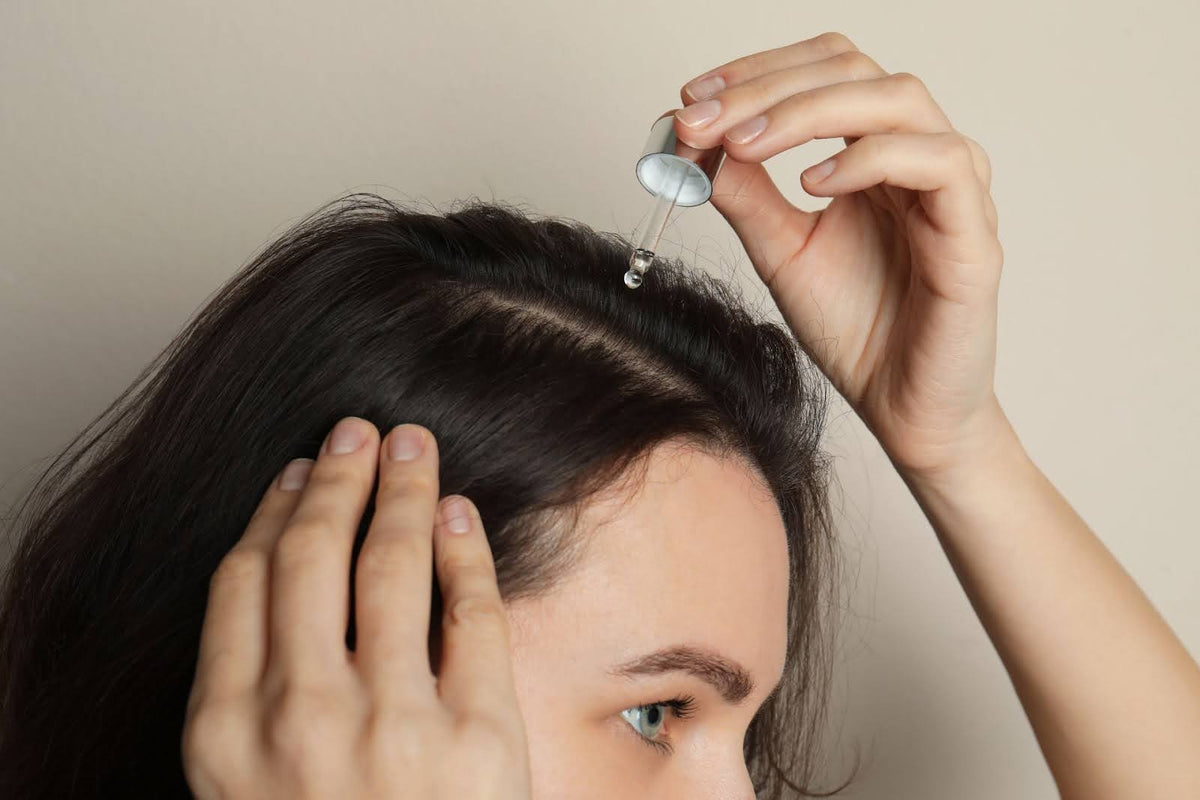
Some grays arrive slowly, a strand here, a strand there, over many years.
Others seem to appear all at once, and that shift can feel alarming in a way that gradual graying never does.
Most of the time, rapid graying has a clear biological explanation, and it is not the dramatic overnight event that popular stories describe.
Sometimes, though, rapid or sudden changes in hair color deserve a conversation with your doctor.
Key fact: A 2009 study published in FASEB Journal found that hydrogen peroxide accumulates in aging hair follicles as the enzyme catalase declines.

What Actually Causes Gray Hair to Appear Quickly?
Gray hair rarely has a single cause, even when the change feels sudden.
Explore the Anti-Gray 30-Day Kit if you are ready to support your hair from both inside and out.
The underlying biology involves a gradual process in the follicle, not an overnight switch.
Over time, the cells responsible for producing pigment, called melanocytes, produce less and less color.
When many follicles reach a tipping point at the same time, the change can look rapid even though the underlying decline was slow.
There are five root causes that researchers consistently link to this kind of accelerated pigment loss.
They are oxidative stress, hydrogen peroxide buildup in the follicle, declining melanocyte stem cells, chronic stress, and scalp aging.
Understanding which of these is most active in your own hair can help you decide what to do next, and whether to see a doctor.
Is the "Gray Hair Overnight" Story True?
The idea that grief or shock can turn hair gray overnight has followed famous figures for centuries.
The most well-known version is associated with Marie Antoinette, whose hair was said to have turned white before her execution.
The scientific explanation for what people observed is more specific than a literal color change.
A condition called canities subita (sudden whitening) is thought to involve a rapid, selective shedding of pigmented hairs.
When pigmented hairs shed faster than unpigmented ones, the remaining hair appears to whiten almost overnight.
The follicles themselves did not change color in hours.
The ratio of pigmented to white hairs shifted dramatically, and that shift was visible.
This distinction matters because it means canities subita is still a real biological event, even if the mechanism is not what most people imagine.
Extreme acute stress can trigger this kind of rapid shedding pattern, which is why the stories persist.
Can Chronic Stress Make Graying Faster?
Chronic stress has a direct biological pathway to the hair follicle, and the research on this connection is meaningful.
A 2021 study published in eLife found that individual hairs regained pigment when psychological stress dropped.
A 2020 study published in Nature showed that stress hormones can rapidly deplete the stem cells that generate new pigment-producing cells.
When those stem cells are depleted, the follicle loses its ability to replenish melanocytes over time.
This is one reason the same person can see graying accelerate during an extended difficult period, then slow during calmer years.
The supplement in FullyVital's Anti-Gray system includes ashwagandha and L-theanine, adaptogens designed to support your resilience to everyday stress, the same stress research links to graying.

What Medical Conditions Can Cause Rapid Graying?
Certain health conditions are known to accelerate pigment loss, sometimes noticeably quickly.
Thyroid dysfunction, both overactive and underactive thyroid, is one of the more common medical links to premature or rapid graying.
Autoimmune conditions, including alopecia areata, can cause sudden patchy hair loss alongside changes in color for hairs that do regrow.
Vitiligo, a condition affecting pigment cells throughout the body, can show up in the hair as well as the skin.
Nutrient deficiencies are another route, and these are more addressable than many people expect.
Research published in the International Journal of Trichology found that low levels of vitamin B12 and folate are associated with premature graying.
If your graying accelerated alongside other unexplained symptoms, such as fatigue, weight changes, or skin changes, a visit to your doctor is a reasonable next step.
A basic blood panel can rule out thyroid issues and nutrient gaps in a single appointment.

How Much of Graying Is Genetic?
Genetics do set the general timeline for when graying begins and how quickly it progresses.
Research suggests that genetics account for roughly 30% of what determines the pace and pattern of graying.
That leaves a meaningful portion tied to factors the body can be supported through.
Those factors include oxidative stress, nutrient availability, and the effects of chronic stress on the follicle.
This is not a case where biology is entirely fixed.
It means that supporting the right systems, consistently, can make a real difference for many people.
When Should You See a Doctor About Gray Hair?
Gradual graying, even graying that feels faster than expected, is usually not a reason for medical concern on its own.
There are specific situations, however, where a conversation with your doctor is the right call.
See your doctor if your graying arrived very suddenly and in patches rather than evenly across the scalp.
See your doctor if graying arrived alongside other physical symptoms you cannot explain.
See your doctor if you are under 30 and graying rapidly, since nutrient deficiencies and thyroid conditions are more likely to be at play at that age.
See your doctor if any family members were recently diagnosed with autoimmune or thyroid conditions, since these have a hereditary component.
In most of these cases, a doctor can identify or rule out a medical cause within one or two appointments.
If a medical cause is ruled out, the conversation can shift to the nutritional and oxidative factors that are more directly addressable.
What Can You Actually Do to Support Your Hair Color?
Once a medical cause has been ruled out, or addressed, the next question is what supportive steps make sense.
The answer starts with the root causes rather than the visible result.
Copper plays a foundational role here.
The European Food Safety Authority confirmed in 2009 that copper contributes to normal hair pigmentation, one of very few EU-authorized claims of this kind.
The Anti-Gray Supplement supplies copper, which supports your body's natural melanin production, alongside L-tyrosine, the building block your body uses to support natural pigment production.
It also includes a multi-antioxidant complex (glutathione, astaxanthin, selenium, and polypodium) that helps defend the follicle against the free-radical damage linked to graying.
The Anti-Gray Serum addresses the same root causes at the scalp level.
Actives like Silverfree and EUK-134 are designed to help reduce the hydrogen peroxide buildup associated with graying.
Greyverse, a clinically studied peptide at 2%, is formulated to support the hair's natural pigment process and the look of fewer grays.
The Anti-Gray 30-Day Kit pairs both formulas in one system designed to work on both sides of the problem at once.
"I see much less grays in the mirror, I don't have to dye my hair for 14 weeks now."
Shana G.
Over 21,600 customers have used FullyVital, with an average rating of 4.7 out of 5.
In a customer survey conducted in April 2025, 85% of customers reported noticing fewer grays in 90 days.

A Simple Framework for Next Steps
| Your situation | Likely next step | FullyVital role |
|---|---|---|
| Graying gradually, no other symptoms | Support the root causes directly | Primary approach |
| Graying rapidly with other symptoms | See your doctor first | Supportive once medical cause is addressed |
| Under 30, graying quickly | Blood panel for B12, folate, thyroid | Complement to medical care |
| Sudden patchy graying | Dermatologist or GP, rule out alopecia areata | After medical evaluation |
| Medical cause ruled out | Address oxidative stress and nutrient gaps | The system is designed for exactly this |

Your hair has been telling you something.
When graying accelerates, that signal is worth paying attention to, whether it points toward a doctor's office or toward a more targeted daily routine.
If the medical path has been cleared, FullyVital is formulated to work on the root causes that remain.
Try the Anti-Gray 30-Day Kit risk-free for 120 days. If you are not seeing results, we will refund you.
Frequently Asked Questions
Can stress really cause gray hair to appear suddenly?
Stress has a real, documented biological pathway to the hair follicle.
Research shows that stress hormones can deplete the stem cells that replenish pigment-producing melanocytes.
A 2021 study in eLife found that some hairs regained pigment when chronic stress decreased.
So while stress alone rarely causes dramatic overnight graying, it can meaningfully accelerate the process over weeks and months.
What is canities subita?
Canities subita is the clinical name for the phenomenon of sudden or very rapid whitening of the hair.
Scientists believe it involves a rapid shedding of pigmented hairs, leaving predominantly white hairs behind.
The follicles themselves do not change color overnight.
The shift in the ratio of pigmented to unpigmented hairs is what creates the dramatic visual effect.
When should I see a doctor about sudden gray hair?
Rapid or patchy graying alongside other unexplained symptoms is worth discussing with a doctor.
Thyroid conditions, autoimmune disorders, and vitamin deficiencies are all known to accelerate graying.
A basic blood panel can identify or rule out the most common medical causes quickly.
If no medical cause is found, you can focus on the nutritional and oxidative factors that are more directly supportable.
Does gray hair caused by a nutrient deficiency grow back darker?
Correcting a deficiency that was driving premature graying can support the follicle's ability to produce pigment again.
Research has linked low B12 and folate levels to premature graying, and addressing those gaps has been associated with improvements in some people.
Results depend on how long the deficiency persisted and how much follicle function remains.
The earlier a deficiency is caught and addressed, the better the conditions for the follicle.
What is the role of hydrogen peroxide in gray hair?
Hydrogen peroxide is a natural byproduct of cellular processes in the hair follicle.
As we age, the enzyme catalase, which normally breaks down this peroxide, declines in activity.
The peroxide then accumulates and damages the melanocytes responsible for producing hair color.
This is one of the most well-documented mechanisms linking oxidative stress to graying, and it is one of the root causes FullyVital is designed to address.
Scientific References
The mechanisms and evidence described in this article are grounded in the published research below.
Wood JM, Decker H, Hartmann H, et al. "Senile hair graying: H2O2-mediated oxidative stress affects human hair color by blunting methionine sulfoxide repair." FASEB Journal, 2009. View Study
Rosenberg AM, Rausser S, Ren J, et al. "Quantitative mapping of human hair greying and reversal in relation to life stress." eLife, 2021. View Study
Zhang B, Ma S, Rachmin I, et al. "Hyperactivation of sympathetic nerves drives depletion of melanocyte stem cells." Nature, 2020. View Study
Daulatabad D, Singal A, Grover C, Chhillar N. "Prospective analytical controlled study evaluating serum biotin, Vitamin B12, and folic acid in patients with premature canities." International Journal of Trichology, 2017. View Study
EFSA Panel on Dietetic Products, Nutrition and Allergies. "Scientific Opinion on the substantiation of health claims related to copper, including maintenance of normal hair pigmentation." EFSA Journal, 2009. View Study
Read more
Why Is Gray Hair a Different Texture? The Science Explained
Gray hair really does feel different in your hands. The change is biological, not imaginary. Your follicle goes through real structural shifts as it stops making pigment. Key fact: A 2009 study pu...
Read more
Can Thyroid Issues Cause Gray Hair?
Thyroid dysfunction does affect hair, and the follicle's pigment system is one of the first places that shows up. When thyroid hormone levels fall out of range, the follicle receives less of the c...
Read more
